DIGITAL-2026-BESTUSE-RSF-10-AWARENESS

Research Support Framework for Situational Awareness on information integrity -

⚫ indicates current topic
Node background color indicates the call topic status
Double click on a topic to center information around it.
Node size is proportional to distance from the current topic

About the connections

The graph above was generated based on the following links

  • DIGITAL-2026-BESTUSE-TECH-EDMO-09-HUBS
    European Digital Media Observatory Hubs

    MOTIVATION The call aims to build a "Common Research Framework," which will utilize the network of 15 national/multinational EDMO hubs to monitor and analyze disinformation.

  • DIGITAL-2025-BESTUSE-TECH-09-WALLET
    Support to the development and certification of EU Digital Identity Wallets

    MOTIVATION Composite: Composite: User Input: The two calls are operationally and strategically linked to implementing the European Digital Identity Framework \r\n User Input: The two calls are operationally and strategically linked to implementing the European Digital Identity Framework

  • DIGITAL-2025-BESTUSE-08-FACTCHECKERS
    European Network of Factcheckers

    MOTIVATION The FACTCHECKERS call (2025) focuses on operational capacity, while the AWARENESS call (2026) aims to build a common research framework to support situational awareness, likely utilizing findings from the networks established in the factcheckers call in 2025.

  • DIGITAL-2024-BESTUSE-07-MULTICOUNTRY
    Support to the implementation of Multi-Country Projects (MCPs)

    MOTIVATION The DIGITAL-2026-BESTUSE-RSF-10-AWARENESS call builds upon the insights, infrastructure or community networks established by earlier multi-country initiatives

  • DIGITAL-2024-BESTUSE-TECH-07-EDMO
    European Digital Media Observatory

    MOTIVATION EDMO (2024) focuses on operational hubs and local detection, whereas the 2026 AWARENESS call aims to build a comprehensive framework for broader situational awareness and structural collaboration across the research community.

Call text (as on F&T portal)

View on F&T portal

Expected Outcome:

At a general level, the project should achieve a strong, visible and recognised impact in scaling, facilitating and accelerating research and analytical efforts focussing on the information environment and information integrity.

The main outcomes of the awarded project will be:

  • The technical solutions created or supported
  • The insights generated from supported research and monitoring projects
  • The proof of concept and lessons learnt for the support of shared infrastructures to support research on the information environment

Project applications will formulate their own deliverables in accordance with their needs analyses and proposed means to address them. At the minimum, deliverables should include:

  • A suite or network of solutions capable of addressing Specific Objectives 1 and 2 (c.f. section 2 ‘Scope – Specific Objectives 1 and 2’)
  • A methodology and dissemination plan for creating access to the created resources (c.f. section 2 ‘Scope – Specific Objective 3)
  • A sub-granting methodology in line with the scope set forth in the section above (c.f. section 2 ‘Scope – Specific Objective 5’)
  • A final report detailing lessons learnt and identifying clear paths for future actions

Objective:

The overarching objective of this action is as follows:

Creating a common research framework with the necessary infrastructure to enable advanced research and analysis on information integrity in the EU.

In order to achieve this overall objective, the action rests on the following specific objectives:

  • Securing or setting up necessary infrastructure, comprising both hardware and software capacities, needed for advanced research on information integrity, that can be accessed by third parties across the EU
  • Supporting, acquiring or creating a set of dedicated tools to facilitate research on information integrity and the analysis of information manipulation
  • Making the dedicated tools and computational capacity accessible to researchers and civil society, where needed through a transparent and effective access mechanism, and promoting its solutions in the relevant communities
  • Contributing to the DSA’s data access regime by collecting views from the research community on the data access API’s of very large online platforms required by the DSA, documenting best practices and shortcomings, and representing the research community in efforts to improve the capability of API’s
  • Set up and implement a grant structure to distribute funds to third parties from the research and civil society communities, funding as the eligible activities:
    • Third party tools or capabilities that support the delivery of Specific Objectives 1 and 2
    • Research projects that utilise the outputs established under Specific Objectives 1 and 2

    Scope:

    Applying consortia must convincingly detail how they will achieve the objectives and deliverables set forth in this call for proposals.

    Proposals must be clearly and well-defined, researched and fully developed taking all time-schedule and budget considerations into account.

    This action is a grant for financial support, which foresees both the delivery of a set of actions by the awarded consortium co-funded at 100% as well as the distribution of a majority of the funds to third parties based on fair and transparent selection criteria (c.f. section 6 ‘Eligibility – Eligible Activities’). Proposals must allocate at least 60% of their proposed budget to the financial support to third parties.

    The below details the scope for the activities of the consortium, as well as for the provision of grants to third parties. Two important, cross-cutting considerations apply to these descriptions on scope:

    Firstly, all provided examples for concrete means of implementation should be considered as indicative illustrations only, and thus not mandatory elements for grant applications. Rather, applying consortia will need to base their proposals on a clear, evidence informed needs analysis that is centred on the demands from the relevant research and civil society communities. The sophistication of the logical links between needs analysis and activities will form a key part of the evaluation process.

    Secondly, proposals should focus on quality over quantity: The proposal of a more limited, but highly impactful set of actions is preferable over spreading resources on an overly wide set of actions that could undermine practical feasibility.

    Thirdly, an emphasis on long-evity is essential. Activities should be planned in a manner that caters to the long-term interests and needs of the relevant communities. A focus on elements such as transferability of outputs will be an important part of the selection process.

    News flashes

    2026-05-07

    Version 1.1 of the call document has been published. For details, please refer to the “History of Changes” on page 2 of the call document.

    2026-05-07
    The submission session is now available for: DIGITAL-2026-BESTUSE-RSF-10-AWARENESS
    2026-05-07

    An information session for interested stakeholders will be held on 28 April, 15:00 - 16:30 CEST. The session will feature a presentation of the call and provide the opportunity for interested stakeholders to ask questions.

    If you would like to attend the session, please register via the following link: https://ec.europa.eu/eusurvey/runner/DIGITAL-2026-BESTUSE-RSF-10-AWARENESS

    All materials used during the session will be made available on the CNECT web-page after the session. Questions from participants will also inform the Questions and Answers section on this page.


    Found 1 annotations in info base click to see
    call topic details
    Call status: Open
    Opening date: 2026-04-21 (2 weeks ago)
    Closing date: 2026-10-01 (4 months from now)
    Procedure: single-stage

    Budget: 6,000,000
    Expected grants: 0
    News flashes

    This call topic has been appended 3 times by the EC with news.

    • 2026-05-07
      version 1.1 of the call document has bee...
    • 2026-05-07
      the submission session is now available...
    • 2026-05-07
      an information session for interested st...
    Call

    DIGITAL-2026-BESTUSE-RSF-10

    Call topics are often grouped together in a call. Sometimes this is for a thematic reason, but often it is also for practical reasons.

    There are 0 other topics in this call:

    Source information

    Showing the latest information. Found 4 versions of this call topic in the F&T portal.

    Information from

    • 2026-04-29_06-20-11
    • 2026-04-22_06-20-10
    • 2026-04-02_06-20-10
    • 2026-04-01_06-20-09

    Check the differences between the versions.

    Annotations

    You must be logged in to add annotations
    Call Document (Upload)
    Added 1 month ago by Daniela Hackl
    call-fiche_digital-2026-bestuse-rsf-10_en.pdf (555.51 KB)
    This is an uploaded version of the Call Document as found on the Funding & Tenders Portal. Use the Call Document tab to browse the extracted information.

    Events

    This is just a very first implementation, better visualisation coming

    Information Session - DIGITAL-2026-BESTUSE-AWARENESS – Common Research Framework on Information Integrity

    2026-04-28 -> 2026-04-28

    online

    This online information session focuses on the Digital Europe Programme call for proposals “DIGITAL-2026-BESTUSE-AWARENESS – Common Research Framework for Situational Awareness on Information Integrity” (deadline 1 October 2026).

    Please register: https://ec.europa.eu/eusurvey/runner/DIGITAL-2026-BESTUSE-RSF-10-AWARENESS

    Data Week 2026

    2026-05-05 -> 2026-05-06

    online

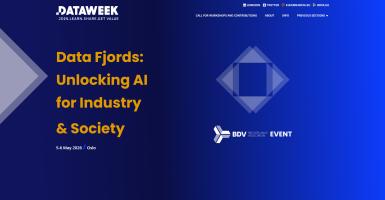
    Data Week 2026 will be a 2-day physical event taking place in Oslo, Norway between 5-6 May. The event will be organised by the Big Data Value Association in collaboration with the following BDVA members: IFE (Institute for Energy technology), NTNU (Norwegian University of Science and Technology), SINTEF and Western Norway Research Institute

    DEP4ALL Applicant Training Series - Managing the Cascade Funding

    2026-05-07 -> 2026-05-07

    online

    Principles and implementation of Financial Support to Third Parties (FSTP) within the DIGITAL Europe Programme. Participants will gain a clear understanding of the regulatory requirements governing FSTP and discover precisely when and how such support may be applied in their projects. The course highlights best practices to ensure transparency and compliance throughout the entire process. Attendees will learn the essential steps for launching calls for third party funding, from setting selection criteria to fulfilling reporting obligations.

    Events are added by the ideal-ist NCP community and are hand-picked. If you would like to suggest an event, please contact idealist@ffg.at.

    Call topic timeline

    What phase of the topic timeline are we in? This timeline contains some suggestions on what are realistic actions you should or could take at this moment. The timeline is based on the information provided by the call topic.
    1. Work programme available

      - 1 month ago

      The call topics are published first in the Work Programme, which is available a while before the call opens. By following up the Work Programme publications, you can get a headstart.

    2. Publication date

      - 1 month ago

      The call was first imported in TopicTree.

    3. Opening date

      - 2 weeks ago

      The call opened for submissions.

    4. Today

    5. Closing date

      - 4 months from now

      Deadline for submitting a project.

    6. Time to inform applicants Estimate

      - 9 months from now

      The maximum time to inform applicants (TTI) of the outcome of the evaluation is five months from the call closure date.

    7. Sign grant agreement Estimate

      - 1 year from now

      The maximum time to sign grant agreements (TTG) is three months from the date of informing applicants.

    Funded Projects

    Loading...

    Project information comes from CORDIS (for Horizon 2020 and Horizon Europe) and will be sourced from F&T Portal (for Digital Europe projects)

    Bubbles

    This call topic is part of:

    Call document info

    This section will come soon and contain the scraped information from the call document, such as the expected impact, scope, and other relevant sections. In the meantime, you can find this information in the call text section or directly on the F&T portal. View on F&T portal